

On 7 January, the UK Government launched an extensive, and far reaching new Road Safety Strategy which sets out an ambitious plan to reduce deaths and serious injuries on Britain’s roads by 65% by 2035
Background
Over the past decade, 22 European countries have made more progress than the UK in reducing road fatalities, causing Britain to slip from third to fourth in European road safety rankings, which is very disappointing. In response, the government’s new road safety strategy sets out a comprehensive approach to reverse a decade of stalled progress.
Key proposals
The new proposals, which the government say are key to reducing deaths and injuries to road users by two thirds, are as follows:
- A new consultation on a minimum learning period for learner drivers
- A new consultation on eye tests for older drivers
- A new consultation on lowering the alcohol limit for driving
- A new Road Safety Investigation Branch
- Eighteen new vehicle safety technologies, including autonomous emergency braking and lane-keeping assistance
- A new Road Safety Board
- Targeting the growing problem of illegal number plates
- And a crackdown on uninsured drivers, and vehicles without a valid MOT
Clyde and Co’s response to the proposals
We welcome the new road safety strategy following the stagnation of road safety in recent years. Road safety charities have been calling on governments to address the shocking road casualty statistics for years, which they say are largely preventable.
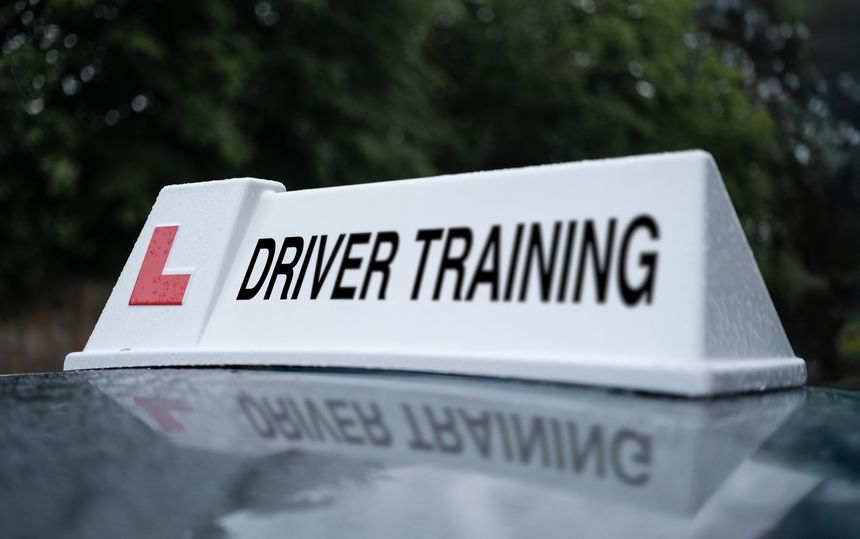
The government will consult on introducing a three or six-month minimum learning period, giving learner drivers more time to develop their skills in varied conditions, such as night driving, adverse weather and heavy traffic.
We support this change as the research on young drivers is clear; young drivers' understanding of risk is limited and therefore extending the time until they pass their test – so that they can gain more experience driving – should positively impact casualty statistics for new learner drivers.
However, it is somewhat disappointing that the government hasn’t also considered addressing the casualty statistics for this demographic, which show that young drivers who drive with young occupants are several times more likely to have an accident.
As Britain’s population ages, a consultation on mandatory eyesight testing for those over 70 will be launched, while options for cognitive testing will also be developed to protect all road users. This has proved to be an understandably contentious issue, with a significant number of older drivers relying on their vehicles for their independence. However, the collision statistics for older drivers do show that eyesight issues are a significant cause of accidents in this demographic, and it is unfortunately often the case that drivers aren’t aware until after a collision has occurred that their eyesight has deteriorated.
A new consultation will explore the use of preventative technology, such as alcohol interlock devices and new powers to suspend driving licences for those suspected of drink or drug driving offences. This is being considered of the back of a number of countries who have successfully reduced drink driving with the introduction of this advanced technology. We welcome this development, as one in six collisions are caused by drivers under the influence of drink.
A new Road Safety Investigation Branch (RSIB) will analyse collision patterns and inform prevention strategies, drawing on linked police forces data to identify root causes and target interventions more effectively. The introduction of this new government agency is undoubtedly a positive development for road safety and one which has been mooted by various governments for some time, and is arguably long overdue. Respective rail and air safety branches have been influencing key safety decision making in their respective sectors for several years, namely the Rail Accident Investigation Branch and the Air Accidents Investigation Branch. The RSIB demonstrates the government’s commitment to placing road safety at the heart of its transport policy for this parliamentary term.
Ongoing monitoring
RAC road safety spokesperson, Rod Dennis, has highlighted the importance of awareness and enforcement in underpinning this new era of road safety: “It’s important to remember that the ultimate success of any new or updated penalties or laws will depend on awareness among drivers and enforcement. But undoubtedly, this strategy is a real chance to give the whole topic of road safety the focus and public attention it deserves.”
We welcome the new road safety strategy and hope it can be implemented as swiftly and efficiently as possible, to ensure the new target of reducing road casualties by two thirds becomes a reality.
We will continue to closely monitor each stage of the Strategy’s development and analyse practical implications for insurers, motorists and employers and publish commentary, briefings and sector specific advice to keep clients fully informed. The new consultations on certain strands of the strategy will close at the end of March, so we expect further updates from the government on those issues by late spring.
For further insights, please contact Kate Hargan, Head of the Motor Crime Team at Clyde and Co.
/Passle/59994aefb00e801a0c1447be/SearchServiceImages/2026-09-09-14-11-57-927-6aa1692d313dbadbe82c05c3.jpg)
/Passle/59994aefb00e801a0c1447be/SearchServiceImages/2026-09-23-11-09-12-800-6ab3b35802670829c8499c3c.jpg)
/Passle/59994aefb00e801a0c1447be/SearchServiceImages/2026-09-22-10-26-25-837-6ab257d1c925049863711441.jpg)